

Filters / Cabin Filters
Cabin filters,
clean air on every journey.
Engineered to maintain cabin air quality against fine particulate, pollen, allergens and traffic-borne gases. Fil Filter cabin filters reliably filter the air passengers breathe throughout the service interval.
Overview
Cabin filters,
engineered for performance.
Cabin air filters are no longer simple dust barriers. They have evolved into multi-layer air-quality systems that work against fine particulate, pollen, allergens, bacteria and gaseous contaminants.
From compact passenger cars to commercial vehicles and off-highway cabins, every interior needs a reliable filter that protects occupants against traffic density, pollen seasons, humidity changes and outside air pollution. The difference here is the difference between filtered air and direct exposure.
Fil Filter cabin filters are developed on a fully synthetic electrostatic media base. Where needed, an activated-carbon layer adsorbs traffic-borne gases and odours, while a bio-functional layer supports allergen and microbial-load control.
Every cabin filter is dimensioned to fit the OE housing. Air entering the cabin passes through the filter media without escaping past the frame, delivering controlled air quality throughout the service interval.

Why It Matters
Clean cabin air
against pollen, allergens and exhaust.
The cabin filter is the only piece of the air-conditioning system that interacts with what the people inside actually breathe. Its quality is felt every time the windows fog, every pollen season, every traffic jam.
Air You Can Trust
Pollen, fine dust, traffic gas, mould spores; all the things that take longer drives or family trips from comfortable to uncomfortable. Held outside the cabin.
HVAC System Protected
Particulate that reaches the evaporator coil clogs fins, spreads odour and shortens compressor life. Cabin filtration is also climate-system insurance.
Safer Behind the Wheel
Fogged windows, irritant gases, allergic reactions; every one of them a documented cause of distraction. Cabin air quality is not cosmetic.
Engineering Features
Fully Synthetic Electrostatic Media
Charged microfibre captures sub-micron particulate by both mechanical and electrostatic mechanisms; efficiency holds up even as the media loads.
Fine Particle Capture to 0.3 µm
High-loft non-woven layer stops pollen, road dust, brake and tyre wear particulate before it reaches the cabin.
Activated Carbon Layer
Impregnated carbon adsorbs NOx, SO₂, ozone and traffic-grade VOCs; the gases that pass straight through a particle-only filter.
Bio-Functional Treatment
Optional biocidal layer neutralises allergens on contact and inhibits mould and bacteria growth inside the filter media itself.
Precision-Fit Frame
Exact-match housing geometry; no air bypass around the element. The whole HVAC stream meets the media, not the path of least resistance.
Sized to OE Service Life
Loft, density and treatment dosing chosen so efficiency holds across the OEM-specified service interval; not just at the bench.
Product Families
Three technology tiers,
each built on the last.
Particle protection is the foundation. Activated carbon adds gas adsorption. The bio-functional stack closes out with allergen neutralisation and antimicrobial control. Three tiers, the same precision-fit frame and the same OE-grade media discipline at every level.
The baseline cabin filter; fully synthetic non-woven media with electrostatic charging that captures pollen, road dust, soot and fine airborne particles before they reach the cabin. The standard fitment for most passenger cars, and the foundation of every higher-grade cabin filter we build.
Best For
Most passenger cars and light commercial vehicles where the focus is dust and pollen; no specific gas exposure.
Media Construction
Where It Serves
Engineered for the field,
validated in the lab.
Applications
Frequently Asked Questions
Technical questions,
short answers.
How often should a cabin filter be replaced?
- Usually once a year or at the mileage given in the manufacturer's service plan. Heavy traffic and long pollen seasons load the filter faster; a drop in air volume from the vents indicates that replacement is due.
What is the difference between an activated carbon and a standard cabin filter?
- A standard filter retains particles such as pollen, dust and soot. An activated carbon layer additionally adsorbs exhaust gases and odours. Types with an antibacterial layer limit microbial growth on the media surface.
Does a cabin filter stop smells from the air conditioning?
- An activated carbon type makes a clear difference by holding odour molecules. A loaded filter left damp becomes the source of the smell itself, in which case the evaporator needs cleaning along with the filter change.
Where is the cabin filter located?
- In most vehicles behind the glovebox, in some models in the engine bay below the windscreen or above the pedal box. Position and dimensions vary by model, so the filter is selected by vehicle.
Related Articles
Technical reading
on the same subject.

What Exactly Does the Cabin Filter Protect You From?
Pollen, traffic gas, brake-pad dust, exhaust soot, mould spores. The cabin filter does far more than the "pollen filter" label on the dashboard suggests.
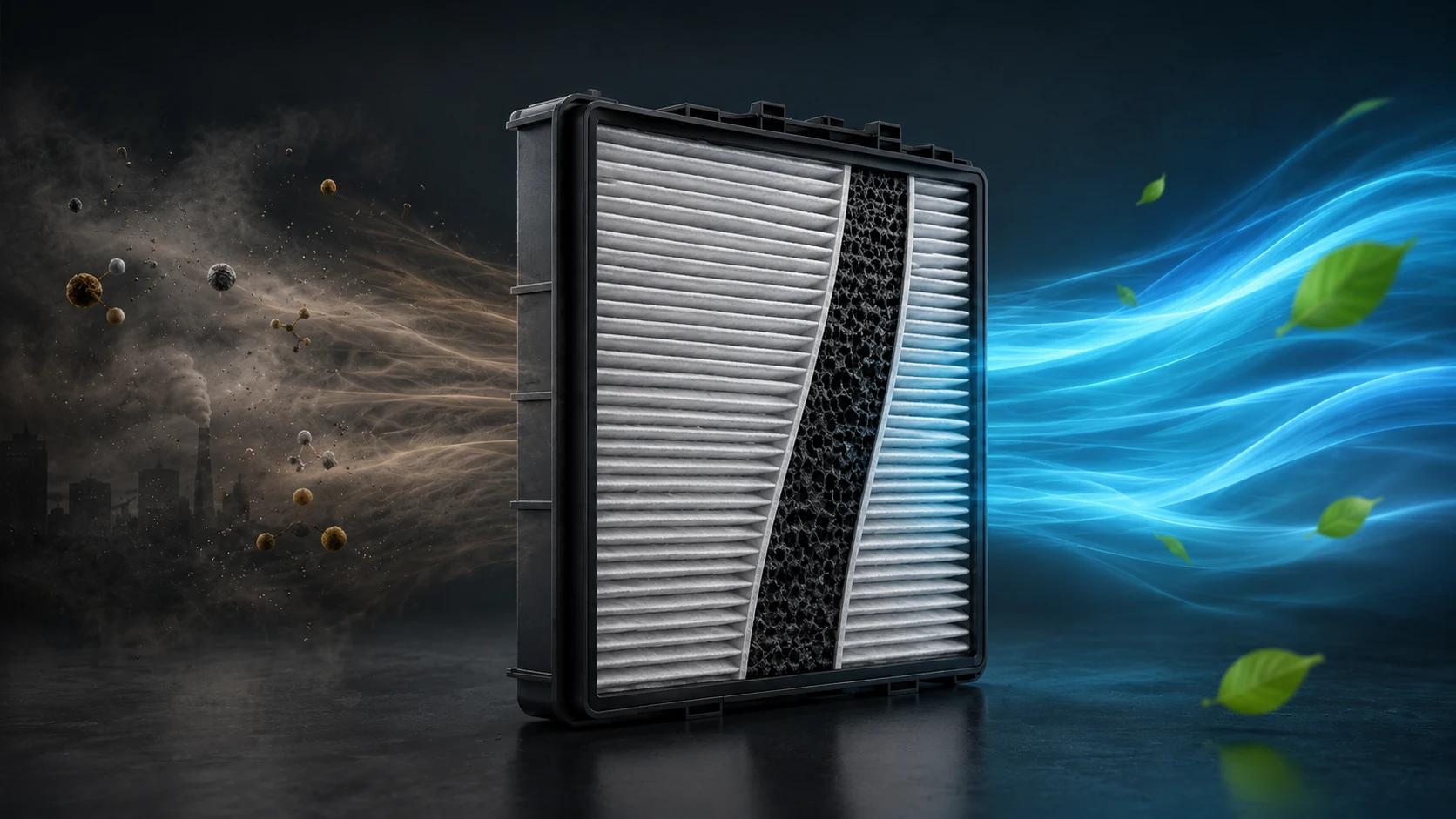
The Hidden Engineering of Activated Carbon
A teaspoon of activated carbon has the surface area of a football pitch. A cabin filter that uses it correctly is not assembled — it is engineered.
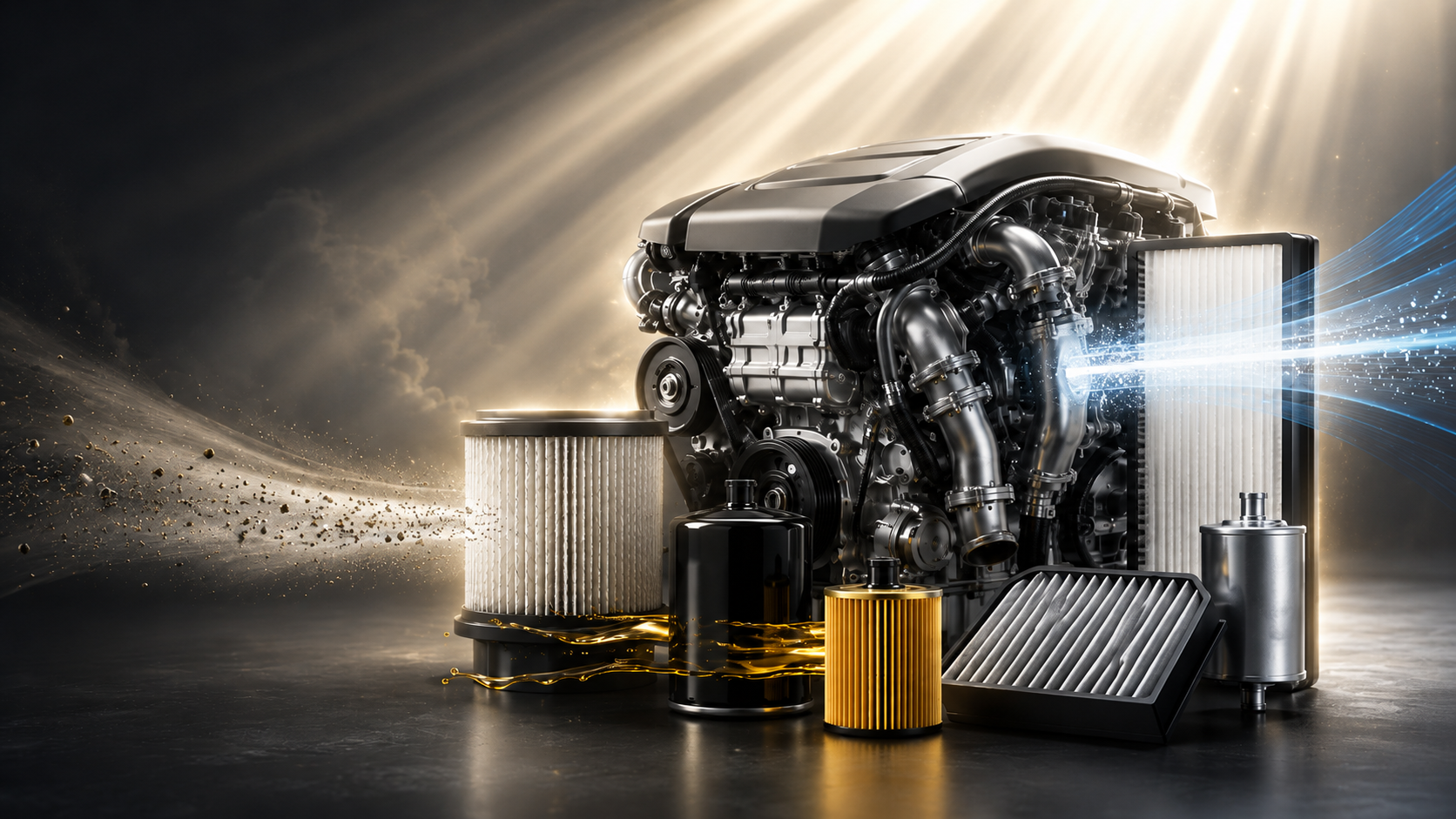
The Silent Guardians of the Engine: A Conscious Choice Guide to Filter Technologies
In modern vehicles, oil, air, fuel, and cabin filters are not merely basic filtration components; they are critical engineering elements that directly affect engine performance, fuel economy, system durability, and cabin air quality. Thanks to advanced media technologies, today’s filter solutions deliver higher efficiency, lower pressure drop, longer service life, and superior protection, helping secure the future of engines and vehicle systems.
Get in Touch
The right filter
starts with the right engineer.
Reach the office closest to you or write directly: a spec, an OE number, or a short description is enough; the engineering team responds within one business day.