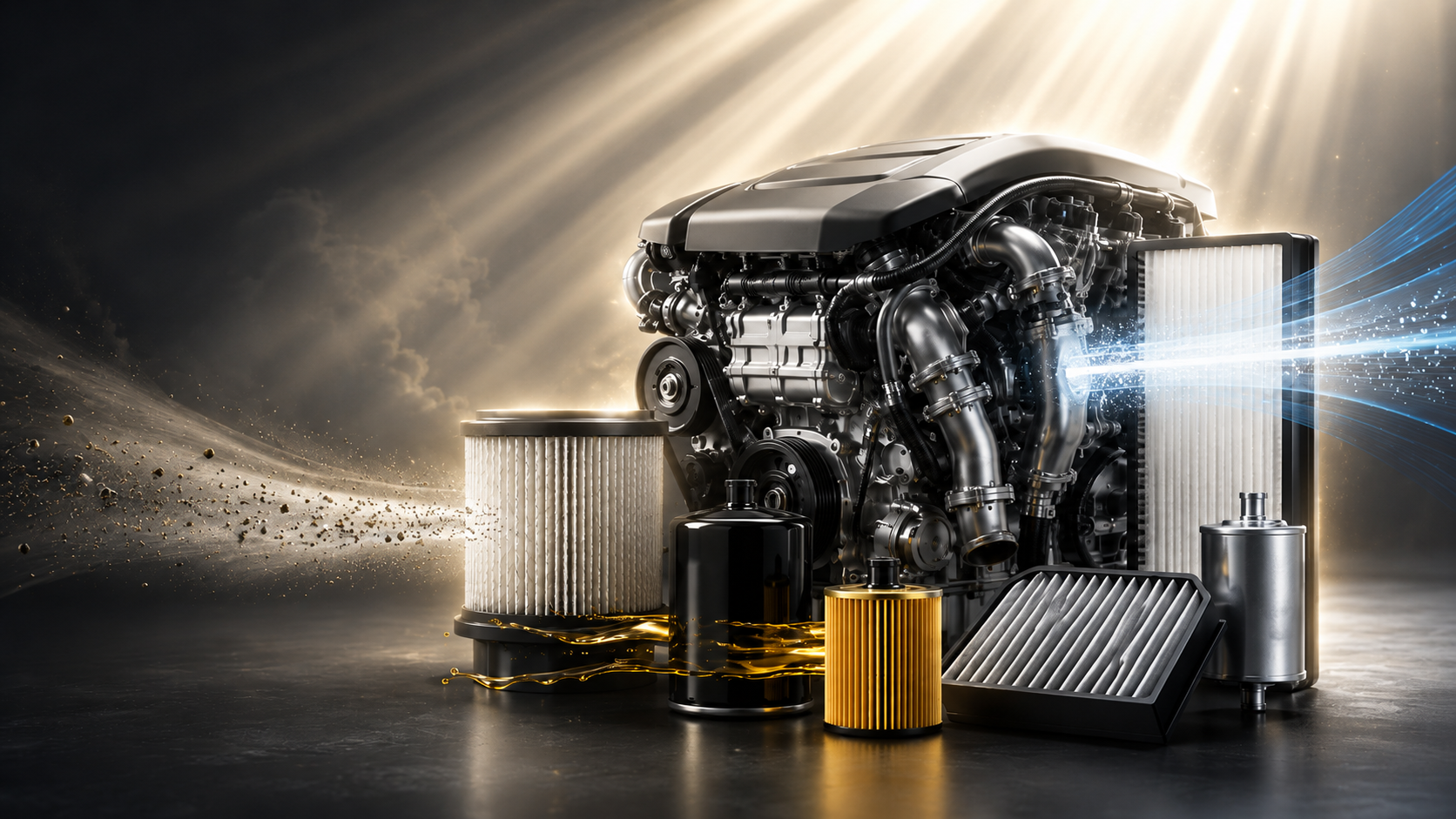
When vehicle performance is mentioned, engine power and technical specifications usually come to mind first. However, the sustainability of these mechanical systems depends largely on filter quality. Filters are among the most critical components that protect the micron-level sensitive parts of modern engines against external contaminants.
Although there are many technical criteria that determine the performance of a filter, the quality of the filtration media used is one of the most important. Thanks to advanced media technologies, it is now possible to produce filters with longer service life, higher efficiency, and lower flow resistance.
Oil Filters: More Than Just a Strainer
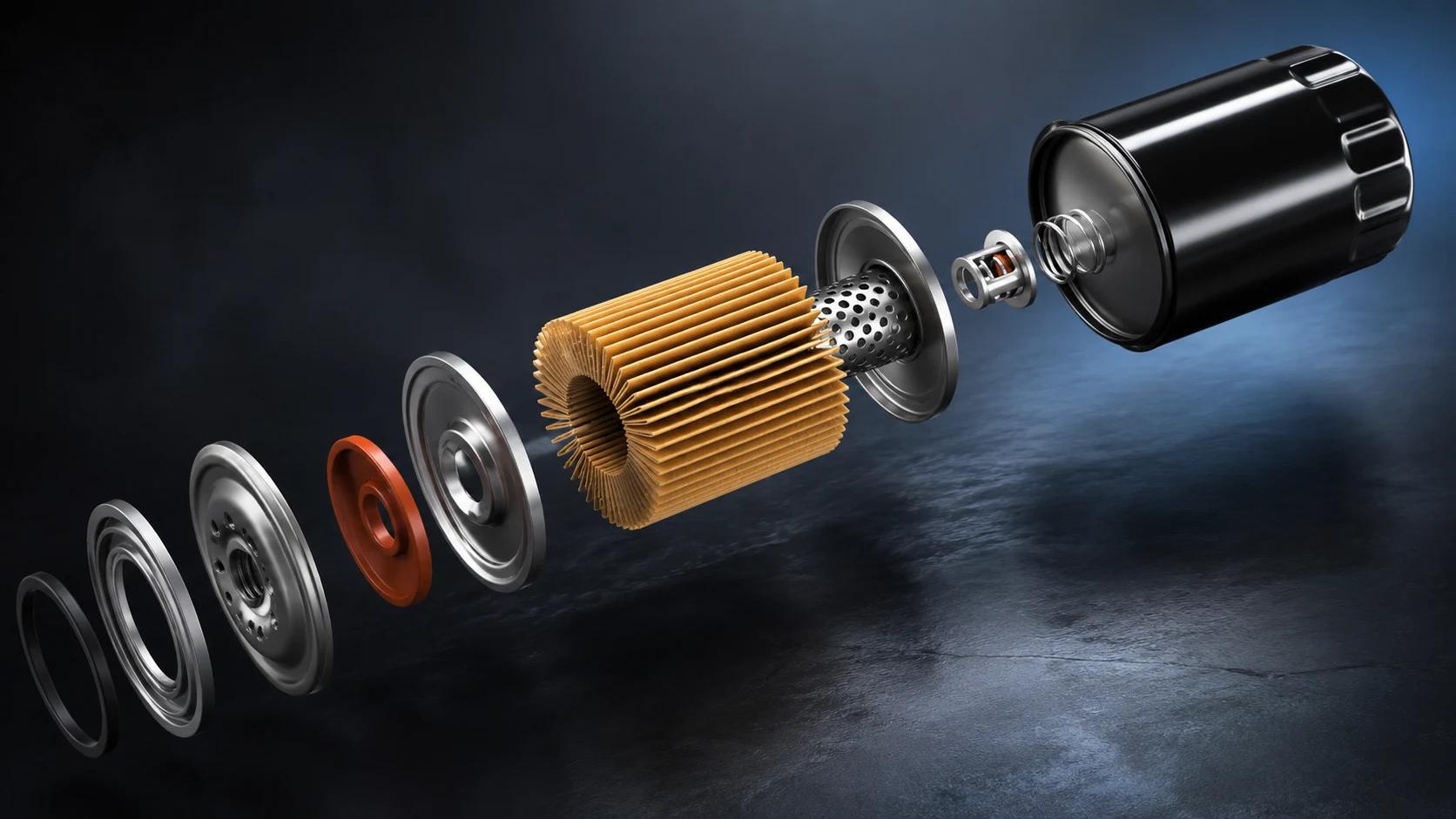
The oil filter is one of the most critical components of the engine system and plays an important role in ensuring long engine life and efficient operation. Thanks to advanced filter media technologies, more efficient solutions are being developed today to improve oil filter performance.
Engine oil quality is one of the determining factors in the overall performance and durability of internal combustion engines. High-performance oil filter media help keep the oil clean by effectively filtering soot, dust, metal particles, and other contaminants. As a result, engine wear is reduced, critical engine components are protected, and longer maintenance intervals can be supported.
Modern filtration solutions also help maintain engine efficiency by offering low pressure drop and high dirt-holding capacity.
There is a common misconception about oil filters: that efficiency decreases as the media area inside the filter becomes smaller. This claim has no real technical basis. The main factor that determines the filtration efficiency suitable for the engine is not the media area, but the type of media used.
When we look at the main media types used in oil filters:
Cellulose Media: This solution is based on 100% cellulose and can optionally be offered with microglass reinforcement. It is a wetlaid, single-layer technology. This media type can be customized according to user requirements through various chemical treatments such as no-cure, advanced cure, phenolic cure, or fast cure. Its main advantages include a wide efficiency range, good durability in hot oil, and adequate dust-holding capacity. In addition, its physical structure is self-supported.
Synthetic Media: This media type consists of a blend of cellulose and polyester fibers and can also optionally include microglass reinforcement. It has a wetlaid, single-layer structure. As with standard media, different curing options such as no-cure, advanced cure, phenolic cure, or fast cure are available in this group as well. Compared to standard solutions, this product group offers higher durability in hot oil and improved dust-holding capacity, increasing performance capability. With its self-supported structure, it promises longer service life while maintaining a wide efficiency range.
Fully Synthetic Media: As the highest segment of filtration media technology, this media is a fully synthetic wetlaid single- or multi-layer technology combined with a supporting mesh. This structure does not require any curing process and is designed for the most demanding applications. It provides the highest durability in hot oil and the highest dust-holding capacity. In addition, it maximizes filtration performance by offering the lowest pressure drop. This fully synthetic platform is the most suitable solution for achieving the longest service intervals and filter downsizing targets.
When selecting an oil filter, attention should be paid not only to the size of the filter or the amount of media used, but also to the properties of the oil, the engine’s operating conditions, performance requirements, and the filtration technology suitable for the usage environment. Choosing a filter designed with the right media is critical for engine performance and long service life.
Air Filters: The Breathing Quality of the Engine
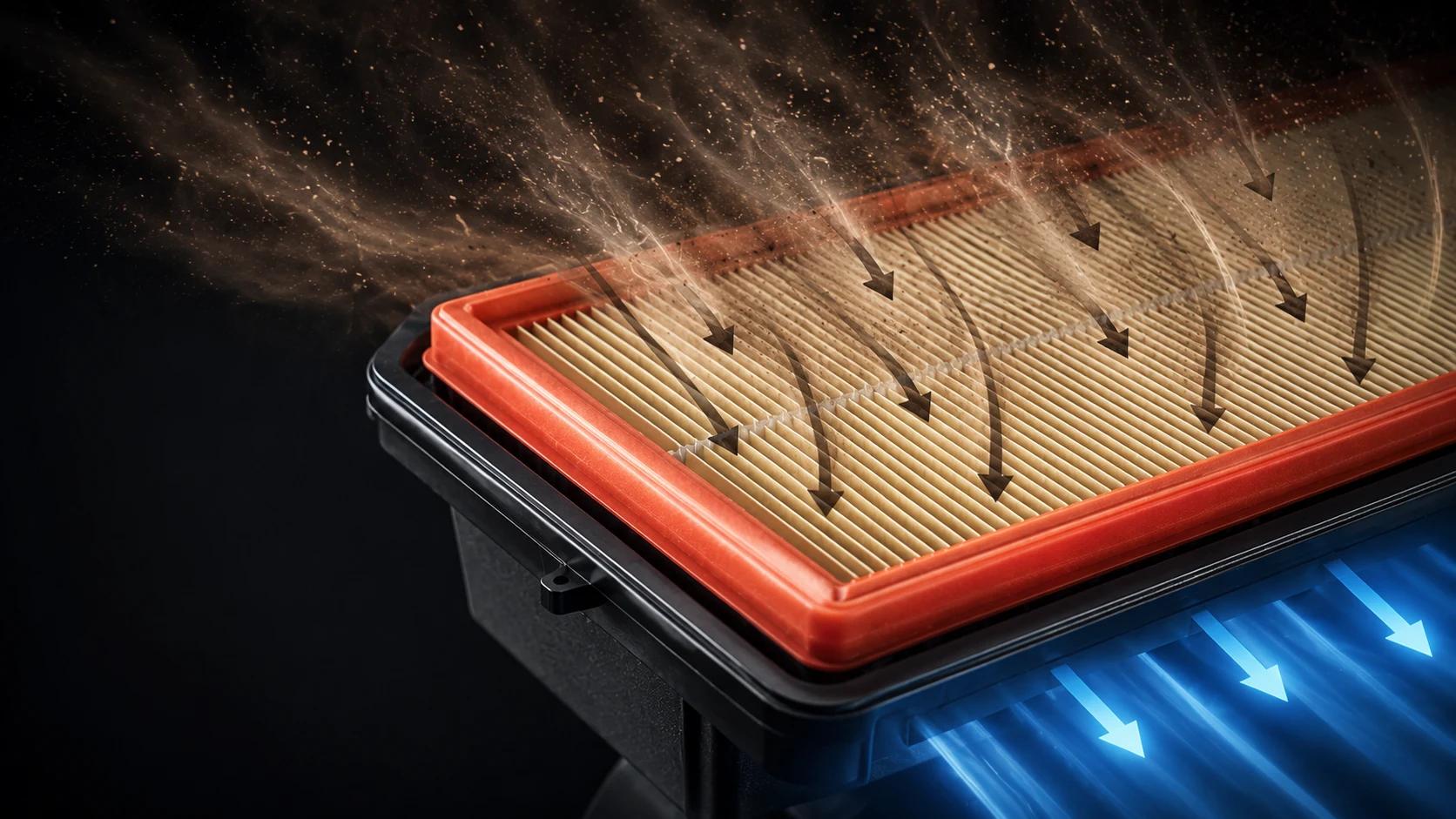
Air filters, often considered the “lungs” of the engine, are responsible for cleaning the air entering the combustion chamber. However, not every air filter is designed for the same operating conditions.
For an engine to have a long service life and operate with energy efficiency, the air intake system is often one of the most critical yet overlooked components. A modern air filter is not merely a part that captures dust; it is a complex engineering product where physics, chemistry, and materials science come together. In today’s engines, air filtration must deliver the highest possible efficiency within limited installation spaces.
Designs that optimize airflow are supported by acoustic measures that reduce engine noise.
Especially in heavy commercial vehicles, secondary safety filters are used to protect the main filter and prevent dust ingress during filter replacement.
Cyclone blocks designed for highly dusty environments use centrifugal force to separate dust particles from the air before they reach the filter.
Media technology is also of great importance here. Modern filter media are expected not only to capture particles, but also to resist environmental risks.
In humid conditions, corrugated production structures known as corrugation and fixing with glue beads are used to prevent the filter paper from sticking together or losing its form.
For engine safety, filters should have flame-retardant properties against the fire risks that may arise from potentially combustible particles drawn into the system.
Fuel Filters: The First Line of Defense in Engine Protection
Modern engine injection systems operate with micron-level precision. A microscopic contaminant or a drop of water in the fuel can cause highly costly failures.
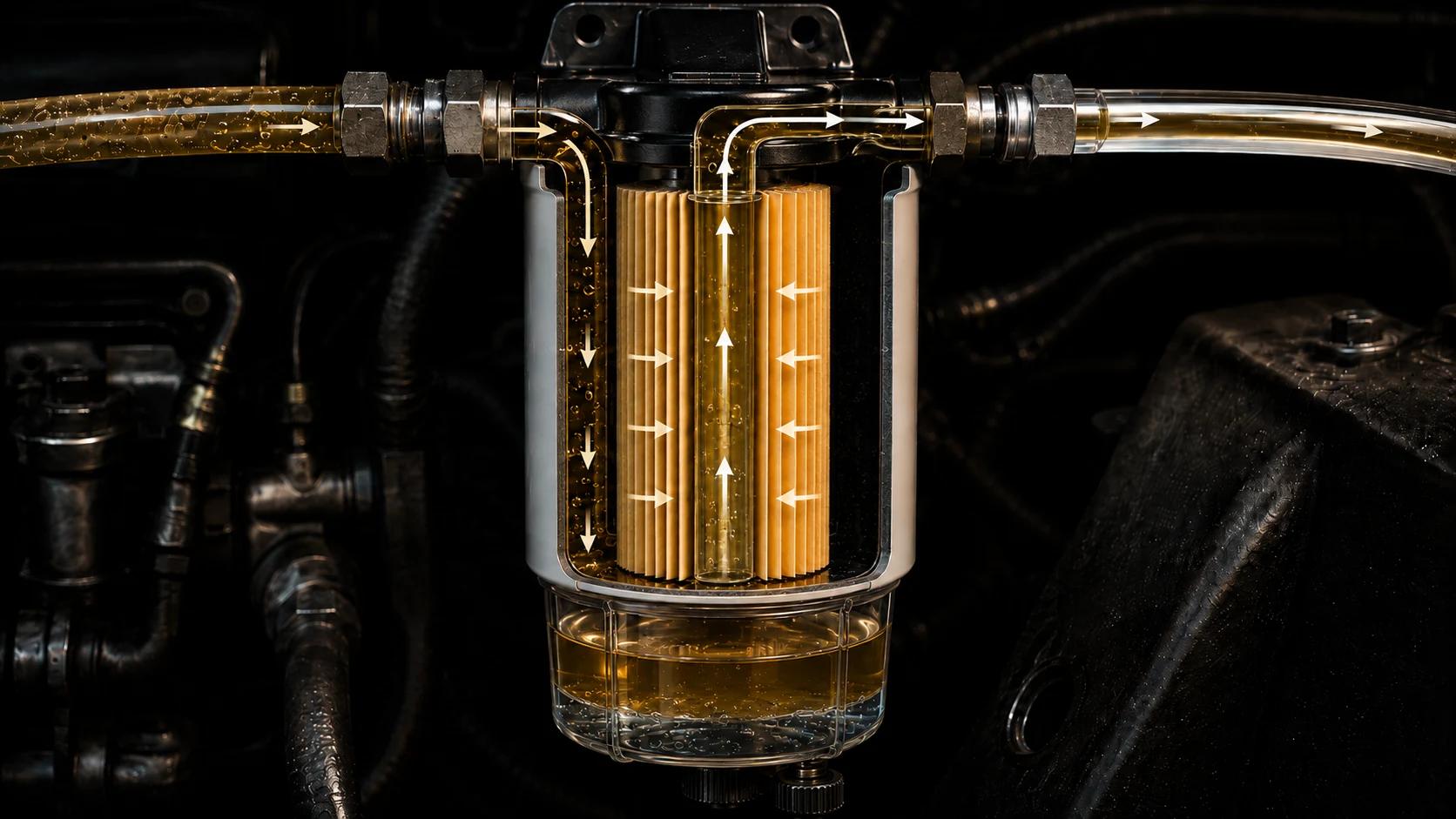
A high-quality fuel filter should not only filter microscopic particles in the fuel with high efficiency, but also effectively separate water from the fuel, which is one of the main causes of corrosion and system failures.
The selected product should:
Maintain its structural integrity against the operating pressures required by the system,
Meet sealing standards,
Have a low pressure drop value that does not restrict fuel flow.
Water in fuel is one of the main enemies of corrosion. A fuel filter is expected to separate at least 95% of water from the fuel, thereby significantly preventing injector and fuel pump damage.
Meeting these specific requirements is also vital for engine performance and fuel economy.
As with air intake systems, different media options are used in fuel filtration depending on the application type. While 100% cellulose or microglass-reinforced cellulose structures provide basic protection, fine-fiber laminate technology offers both high capacity and effective fuel-water separation in standard fuels. For more aggressive fuel types such as biodiesel, advanced composites that maximize water-separation performance are preferred.
Today, advanced filtration solutions offer critical advantages such as cost-effective fuel-water separation, high micron-level efficiency, and full compatibility with ultra-low sulfur diesel, or ULSD, and biodiesel fuels. These technologies secure not only the engine’s present performance, but also its future under demanding fuel conditions.
Cabin Filters: The Key to Driving Comfort and Interior Air Quality
The primary function of vehicle cabin filters is to optimize interior air quality by filtering particles and gases from the outside environment, thereby protecting both passenger health and driving comfort. These systems also extend the service life of heating and air-conditioning units by protecting them against dust and dirt accumulation.
Especially filter media containing high-performance activated carbon create an advanced protective barrier by absorbing unwanted odors as well as harmful gases such as volatile organic compounds, VOCs, sulfur oxides, SOx, and nitrogen oxides, NOx.
Cabin air filter media developed based on Trinitex® and PurXcel™ technologies offer advanced filtration solutions that combine both particle and gas removal in a single structure.
One of the most important advantages of these advanced solutions is their ability to combine gas and particle filtration within a single media structure. This enables unpleasant odors, harmful gases, and fine particles to be filtered simultaneously. Customizable media solutions supported by broad application experience and strong engineering know-how effectively meet the high-performance expectations of modern cabin air filtration systems.
In Summary
To secure the long-term health of your engine, filter selection should be considered not merely as a matter of physical fit, but as a strategic investment. The most critical point in this process is that the selected filter must fully meet the technical requirements defined by the vehicle’s original equipment manufacturer, or OEM.
To identify the most accurate part, up-to-date digital catalogs and application guides provided by manufacturers should be carefully followed.
Ultimately, when purchasing a filter, the real question should not be “Does this part fit into the housing?” but rather: “Which technical validation processes and laboratory tests has this product passed?”
This conscious approach is the safest step toward protecting the future of your engine.