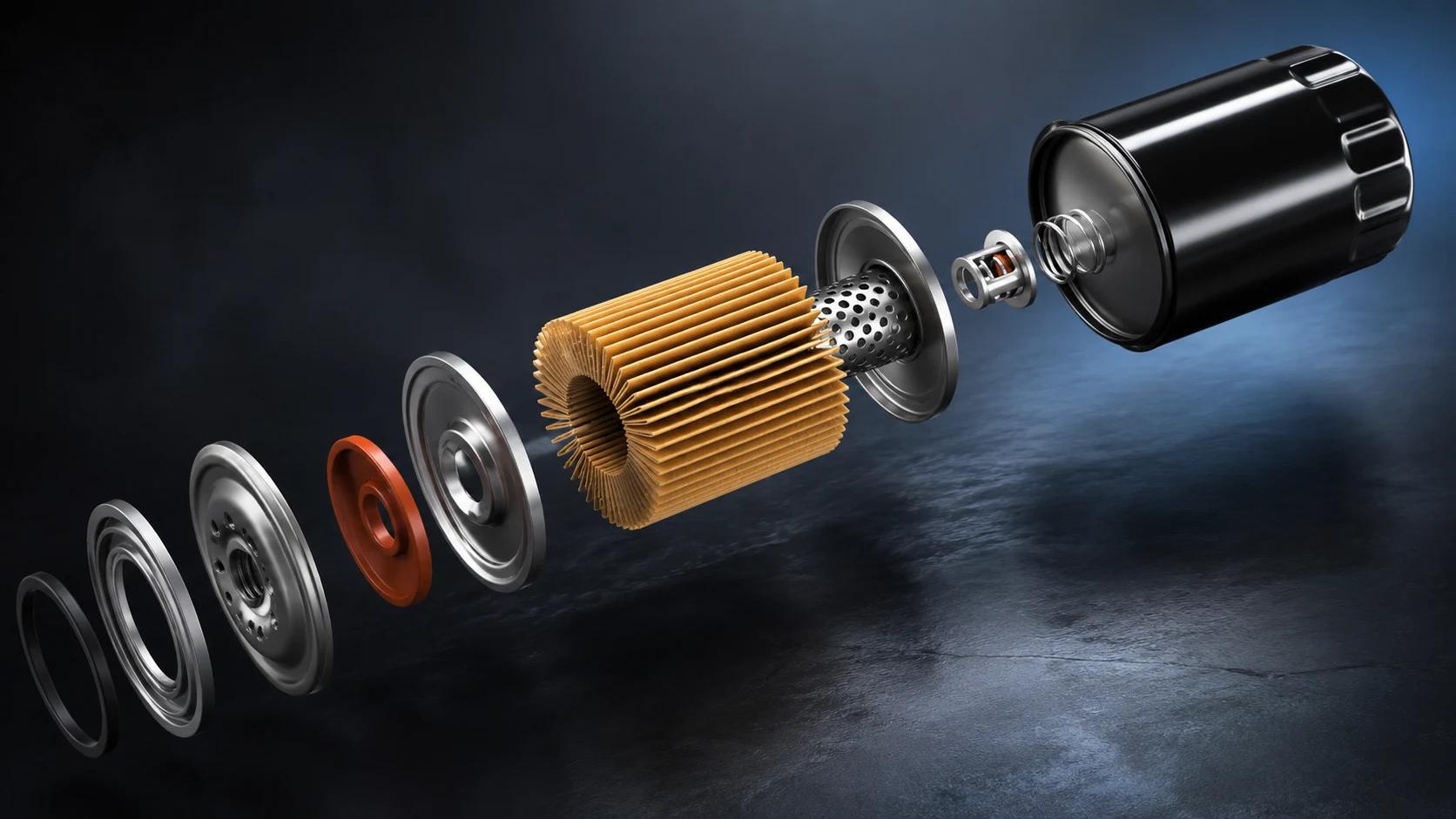
Inside an oil filter sit two small valves invisible from outside. They are the filter's quiet heroes. The first works the moment you turn the key; the second is the last line of defence against blockage in cold weather.
Anti-drainback valve: oil pressure on first crank
When the engine stops, the oil pump stops too — but gravity does not. On engines where the filter is mounted horizontally or at an angle, oil inside the filter starts to drain back toward the oil pan under gravity.
When you turn the key in the morning, the oil pump has to refill the filter first. That takes 1 to 3 seconds, and in those seconds the engine runs dry. The crank bearings touch metal-to-metal.
The anti-drainback valve inside the filter is a flexible rubber diaphragm. When the engine stops, it holds the oil inside the filter; when you start in the morning, oil pressure reaches the crank bearings without delay.
Bypass valve: the last safety against cold-clogging
In cold weather the oil thickens dramatically — its viscosity climbs. A filter that has started to clog, or that has simply reached the end of its service life, can stop oil flow completely on an -20 °C morning. The engine is then forced to run dry.
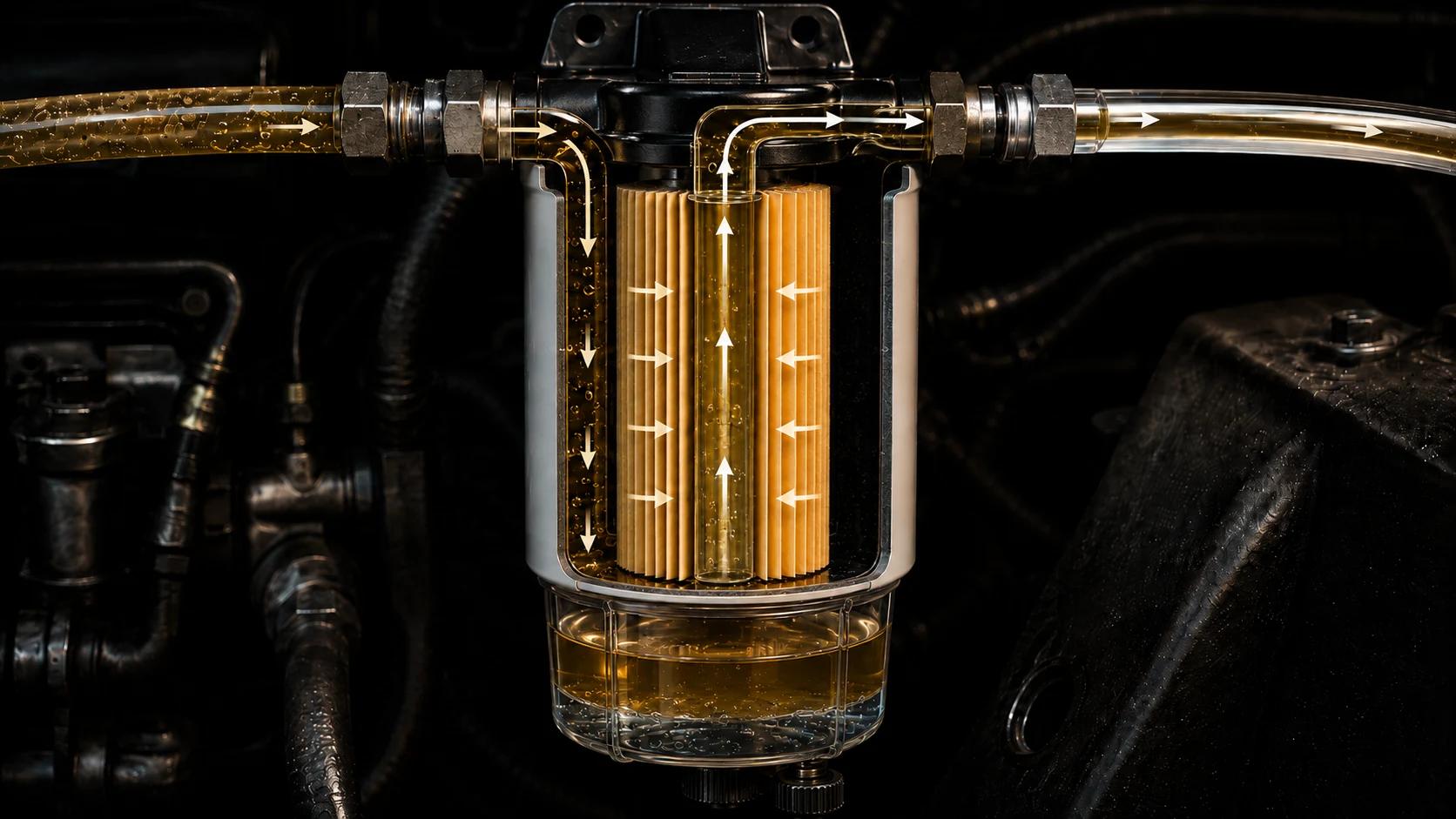
To prevent this, there is a bypass valve inside the filter. When the pressure difference across the filter exceeds a certain threshold — typically 1 to 2 bar — this valve opens. Oil reaches the engine directly without going through the filter.
The engineering trade is honest: running on unfiltered oil is better than running dry. The bypass valve is the safety that saves the engine in the worst-case scenario.
The spring of the valve is not the cheap part
The full load of the bypass valve sits on a small coil spring. That spring has to hold its calibration through:
- Thousands of heat cycles (engine cold-warm)
- Tens of thousands of pressure pulses
- The entire service life of the filter — opening at the same threshold every time
Premium oil filters use heat-treated spring steel. In the cheap alternative the spring starts to open at 0.5 bar lower pressure halfway through service life. The result: in normal driving, a slice of the filtration is already being bypassed and dirty oil reaches the engine.
Two tiny valves are the real engineering decision behind an oil filter. A correctly calibrated filter looks identical to a cheap one from the outside — and is a completely different part for the engine.