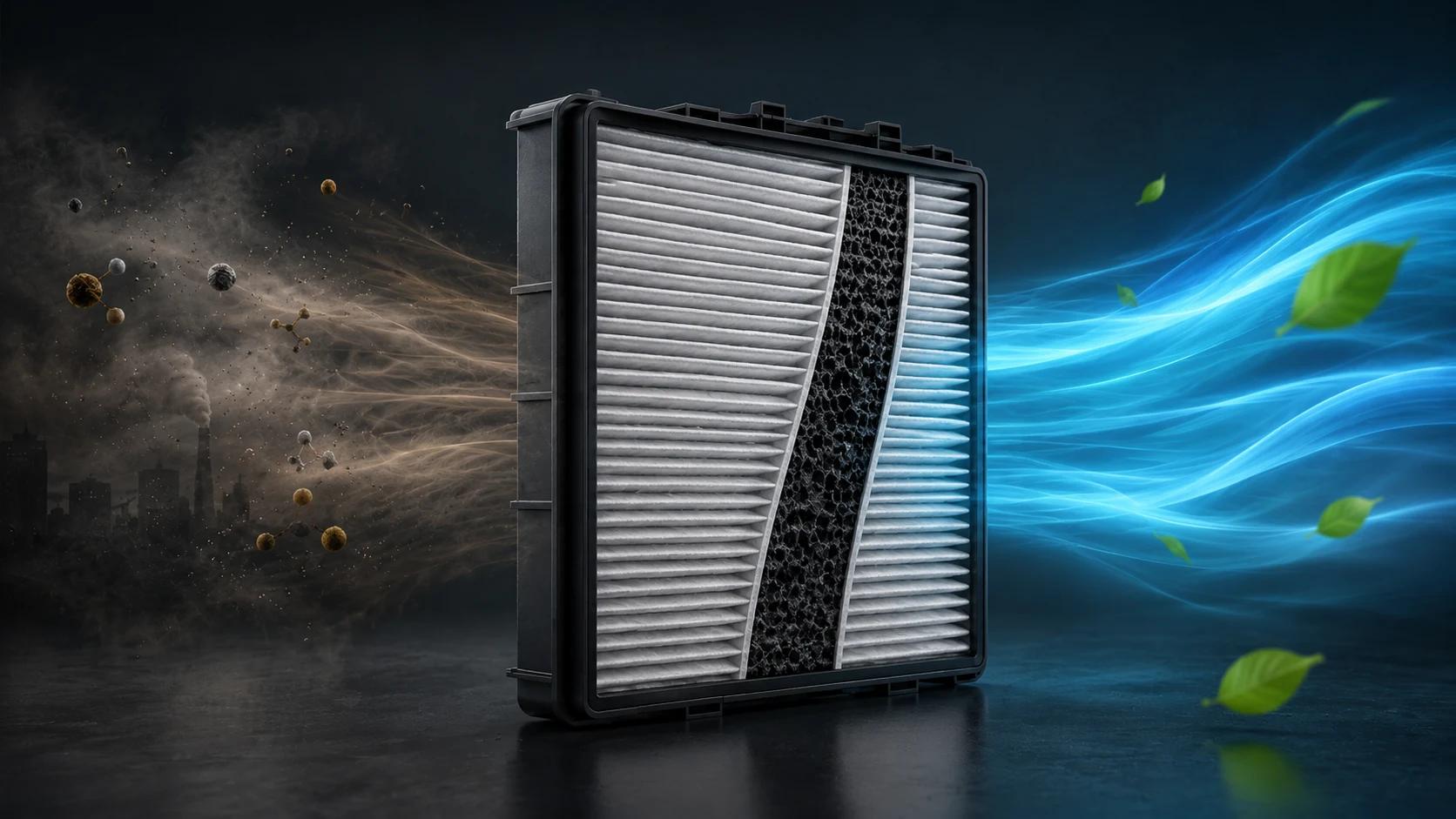
Activated carbon is the invisible-but-decisive layer of the cabin filter. The quiet layer that suppresses the smell of asphalt after rain is the work of calculation, not chemistry.
Surface area matters more than weight
One gram of activated carbon carries 1,000 to 1,500 square metres of surface area — roughly two tennis courts. That surface is a network of micropores created by steam or chemical activation of the carbon. Activated carbon is a small sponge on the outside, a vast cavern on the inside.
Gas-phase pollutants — NOx, SO₂, ozone, volatile hydrocarbons — bind to that surface by weak intermolecular forces. So a small mass with a large surface outperforms a much heavier mass with low surface area.
Which pollutant gets caught is decided at impregnation
Plain activated carbon does not catch everything; basic gases such as ammonia are a known weakness of untreated carbon. That is why the carbon in premium cabin filters is impregnated (its surface is coated) with specific chemistries:
- Phosphoric-acid impregnation — neutralises basic gases
- Potassium-carbonate impregnation — affinity for acidic gases
- Copper-salt impregnation — for sulphur-containing compounds
Each impregnation engineers a specific affinity for a class of gas. No single carbon grade is enough for the complex gas mixture of urban traffic — multiple impregnations work side by side.
The right thickness is the calculated thickness
The thickness of the carbon layer decides how long the surface area stays usable:
- A layer too thin → saturates quickly under high airflow, short protective life
- A layer too thick → pressure drop rises, loads the HVAC blower
The correct thickness is calculated against the cabin airflow rate, the target service life and the expected pollutant concentrations.
Activated carbon is not really a component, it is a calculation. The difference between a filter that runs the calculation right and one that does not is the air you breathe inside the cabin.
Filter type in this article