The hardest season for a fuel filter is not summer, it is winter. Through summer, water droplets, biodiesel residue and storage sediment slowly build up in the filter. Until the cold arrives, all of this can be tolerated; the moment temperatures drop, it all turns into a clogging cause at once.
A water-loaded filter sets up its first freeze block
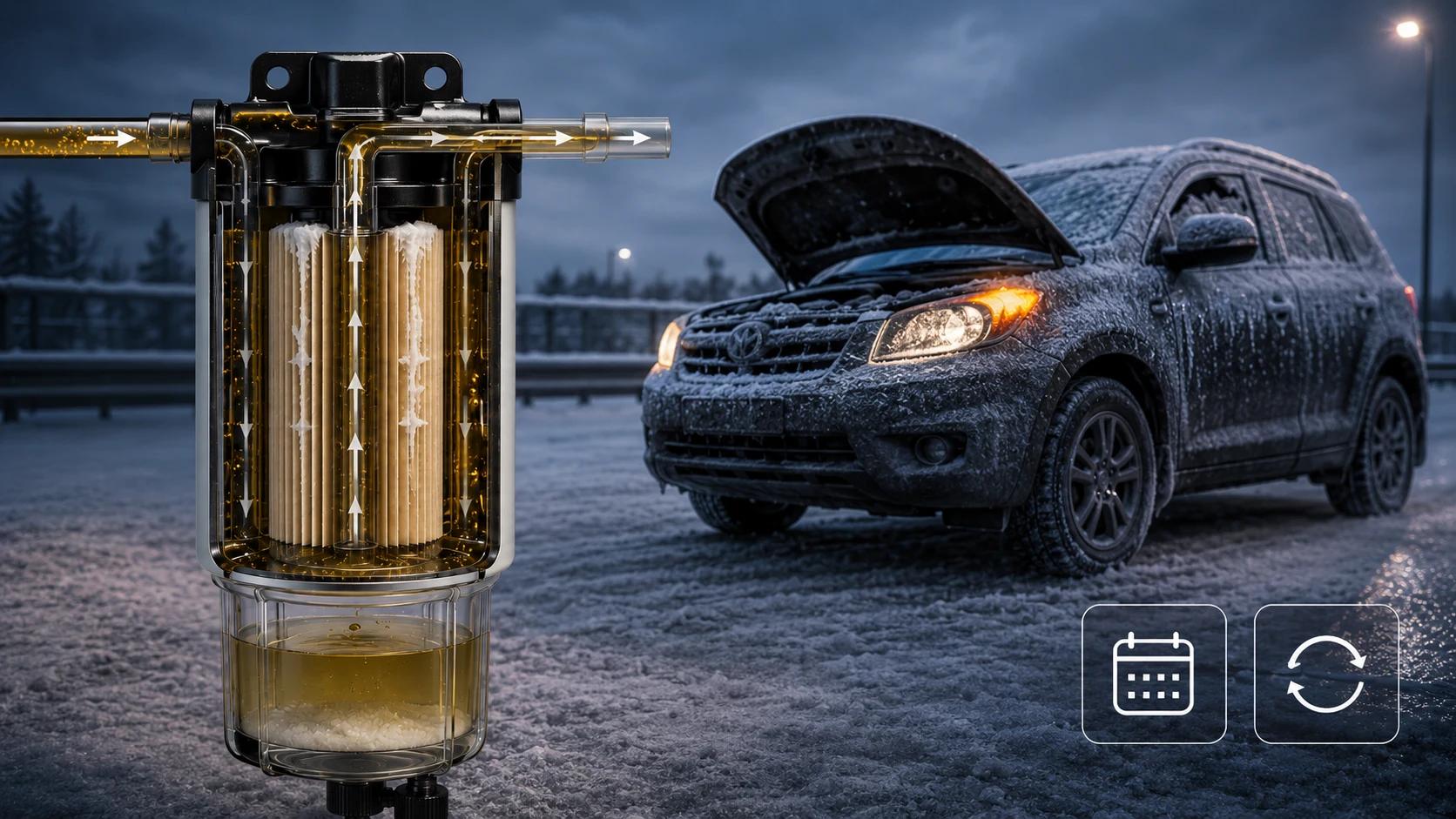
There is always some water in diesel fuel. At summer temperatures the water circulates dissolved in the fuel — you cannot see it. When the air cools, the water separates and collects as droplets on the filter face.
Around -5 °C these droplets begin to freeze. A frozen droplet is large enough to completely block a fine fuel filter. On the morning crank the engine turns 2–3 seconds and then stops. Fuel is not getting through.
Paraffin formation stays invisible in summer
Diesel fuel starts to form paraffin crystals around -10 °C. Paraffin is a natural component of diesel — dissolved in the fuel when warm, solidifying as it cools. The fuel's CFPP value (the cold filter plugging point) tells you the temperature at which these crystals grow large enough to plug a filter.
In summer, fuel temperatures are too high for these crystals to form; they pass through the fine filter paper without trouble. After a cold night, paraffin crystals attach to the filter face on the first crank and push the pressure drop into the critical zone within minutes.
Early replacement zeroes out the winter risk
Changing the filter at the end of autumn does three jobs at once:
- Clears the accumulated water from summer
- Removes paraffin seed crystals from the filter face
- Flushes out summer sediment
Recommended timing: November, December at the latest. The new filter enters winter at full capacity. Small amounts of water or paraffin in the fuel are caught long before they reach a problematic concentration.
A filter replaced on the manufacturer's interval does not surprise on the first -10 °C morning. A filter half-skipped, with summer sediment carried into winter, has a quiet sentence to deliver on that morning.
Filter type in this article